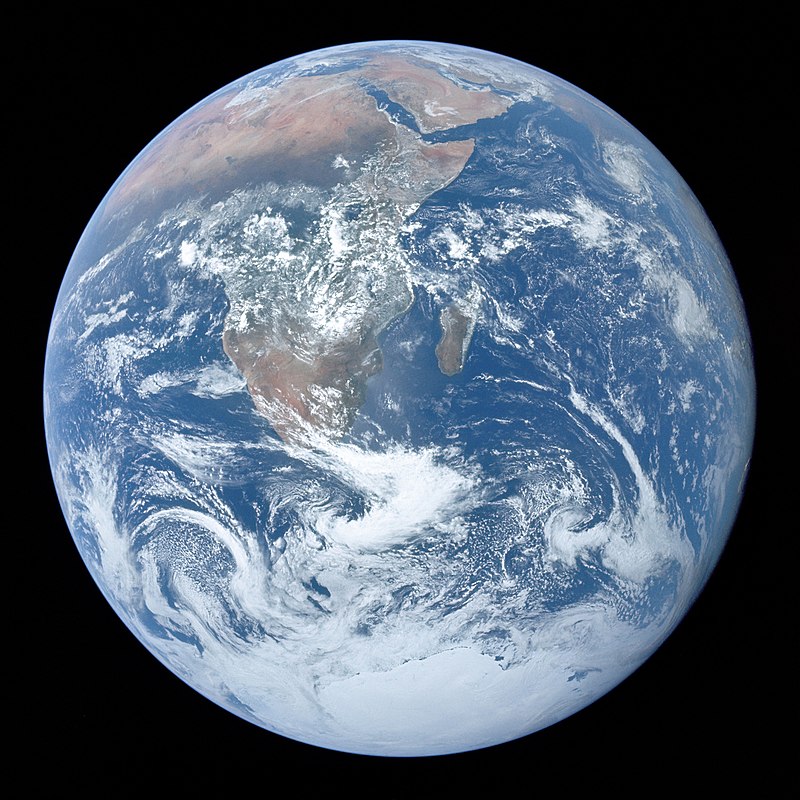
The earth
Earth is the third planet in
the solar system from the sun after Mercury and Venus.
It is considered one of the largest terrestrial
planets and the fifth largest planet in the solar system, in terms of its
diameter, mass and density, and this planet is also called the world.
Earth is home to millions of species of living
organisms, including humans; it is the only known place in the universe where
life exists.
Earth was formed about (4.54 billion) years ago.
Since then, the Earth's biosphere has changed the
atmosphere and the non-living conditions on the planet, allowing the
proliferation of organisms that live only in the presence of oxygen and the
formation of the ozone layer, which works with the Earth's magnetic field to
block harmful radiation, allowing life to exist on the surface of the Earth.
The ozone layer blocks ultraviolet rays, and the
Earth's magnetic field works to displace and deflect charged elementary
particles coming from the sun at great speeds and send them into outer space
away from the Earth, so they do not cause harm to living organisms. More than (8
billion) people live on Earth, and the Earth's various resources work to
maintain a huge global population of humans, who share the world among
themselves and are distributed among about 200 independent countries. Humans
have developed diverse societies, civilizations and cultures, and interact with
each other in various ways that include diplomatic communication, tourism, trade
and military combat as well. Different theories and representations of the Earth
have appeared in human culture. Some ancient civilizations embodied it as a
goddess, some believed it was flat, and others said it was the center of the
universe. The prevailing belief currently states that this planet is an
integrated environment that requires human supervision to protect it from the
dangers that threaten it, which could ultimately threaten man himself.